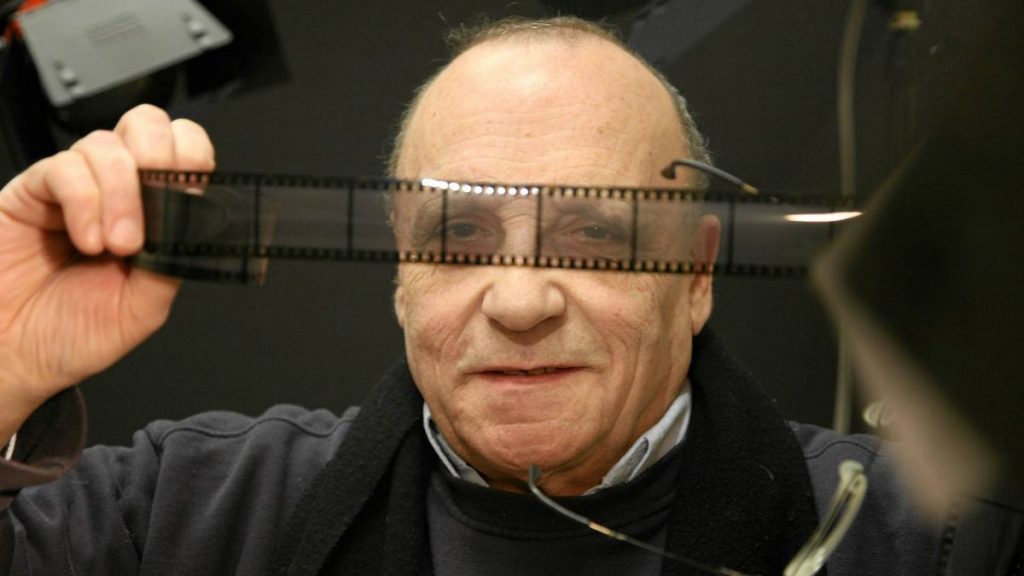
The Documentaries of Marcel Łoziński (b. 1940)

Dina Iordanova, © DinaView 2021

Marcel Łoziński is Poland’s best-known and most respected documentarian. Even though about twenty (out of a thirty-strong filmography) documentary films by Lozinski can be accessed online without much difficulty (mostly shot by acclaimed cameraman and committed teammate Jacek Petrycki), only a handful are supplied with English subtitles. 

At the Lodz Film School Łoziński studied under Kazimierz Karabasz (whose classical 12-min long  Musicians/Muzykanci, 1960, is available at  https://www.youtube.com/watch?v=0ItodKFSfKM). He entered the documentary scene around the same time as Krzysztof Kieslowski, who had made over 25 documentaries in his youth but then decided to switch to features as documentary could not represent intimacy, as he is known to have observed (Kieslowski’s 1980 Talking Heads/Gadające glowy, can be viewed at  https://www.youtube.com/watch?v=ClUBYsA3vws). Lozinski had a long and distinguished career, mainly at the Kalejdoskop studio, alongside other documentarians from the Polish School, such as Tomasz Zygadło. In the 21st century he helped the creation of the Wajda Film School in Warsaw where he has been teaching in recent years. 

Made available on the Lodz Film School’s YouTube channel, Marcel Łoziński’s early documentary short On the Wings (Na skrzydłach, 1969, 5 min, Available: https://www.youtube.com/watch?v=i-J4DNkT5UY&t=51s) is a student film that he made whilst learning the craft under Kazimierz Karabasz. Even if only in Polish, this five minute-long observation of tram depot workers — in many ways reminiscent of Milos Forman’s character close-ups and the films of the Czech New Wave (Konkurs/The Competition, 1963) – is an Eastern European period gem showing working people outside work, in their collective environment, a ‘third place’ of sorts — a montage of fleeting moments from a lunch break that reveal the specific gender dynamics, including a brief speech on joy by the choir master, followed by a joyful yet somewhat strained performance of the workers’ choir. The mass and the individual.

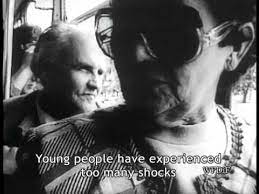
Łoziński’s Workshop Exercises (Ćwiczenia Warsztatowe, 1986, 12 min, Available: https://www.youtube.com/watch?v=s0HXQLKJDq0) has a reporter chase people on the street and demand to know their opinion on today’s youth: the first half of the film puts together those people who gave negative opinions whilst the second presents an altogether different, positive picture. The intention is to reveal how easy it is for media to manipulate the material at their disposal and make it fall in line with the gatekeeper’s agenda. One wonders, however, if all these people who clearly say they do not want to speak to the reporter — yet have ended up in the movie — have actually been asked for consent. At the end, a disclaimer informs the viewer that no consent was asked for nor obtained. 
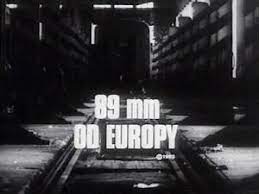
Łoziński’s multiple award-winning 89 mm from Europe (1993, 12 min; Available: https://www.youtube.com/watch?v=ERtnf5rDhA4) sets the tone for most of his work of the post-communist period: lyrical, existential, humanist. The film features no dialogue and only uses a loose narrative, structured around a forced stop that the passengers on an international train between the former USSR and Poland need to endure whilst the wheels of their train are changed to accommodate the difference between Soviet train track standards (89 mm wider) and the European ones. Young Tomek, the director’s son, wanders around and curiously explores the station’s small universe. The film is an allegory of the transition that Poland lives through at the time, of its hopes of joining Europe. 
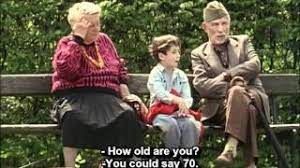
Tomek’s presence is even more important in Anything Can Happen (Wszystko moze sie przytrafic, 1995, 39 min; Available: https://www.youtube.com/watch?v=J6QRJrk_E3U), a film that was voted Best Polish Documentary by critics in 2016. It is another one of the ‘existential’ films of Łoziński. Here, the boy rides his scooter around a park and drops in on various older people who have come out to enjoy some sunshine on the benches that are scattered around the park. He enters seemingly innocent dialogues that acquire new, more philosophical, meaning and significance when perceived by an outsider — and it seems that most of the dialogues are shot with a hidden camera. They trigger reflections about youth and ageing, about the fear of death, about loneliness and insecurities. Twelve years later, Łoziński brings Tomek, now a youth of 18, back to the same park. Only, most of the benches are empty now. The visit triggers yet another layer of reflection on the gracious passing of time.
Made in 1998, Łoziński’s So It Doesn’t Hurt (Żeby nie bolało, Available: https://www.youtube.com/watch?v=PQ-oMvqqhnU) is probably one of his most subtle ‘existential’ films; it is also one of the rare cases where the documentarian appears in person, for a moment, for a brief but memorable interaction with his subject. It is twenty-three years since the release of the original documentary short that precedes So It Doesn’t Hurt, and Łoziński returns to visit with farmer Urszula Flis, a woman who already in her twenties had declared to the world that it is her choice to stay single, live alone, and run the family farm in the village. She did not feel she needed a partner, and those who were available to her did not match her intellectual interests. The first film, The Visit (Wysita, 1975) is an engaging even if nosy portrayal of a proto-feminist and, from today’s point of view, appears intrusive and judgmental; most of this first film has made it into the second one, in bits and pieces that are now intercut to a different order. For the 1998 visit, the director brings the same photographer who shot the first reportage (then a young bachelor, now a mature man) and a different female reporter to interview her (the original one no longer wanted to take part, it seems). More than two decades have passed and Urszula is now in her 50s. She has had the life she chose, and now, after her mother’s passing, lives alone at the farm. She drives around a tractor and takes care of the animals. Her house is full of books; she reads and listens to music and is happy with her life of a recluse. Whilst in the house, she opens up to the journalist’s probing on more personal topics that she normally would seek to avoid. She is prepared to talk, just that she does not want it to hurt…
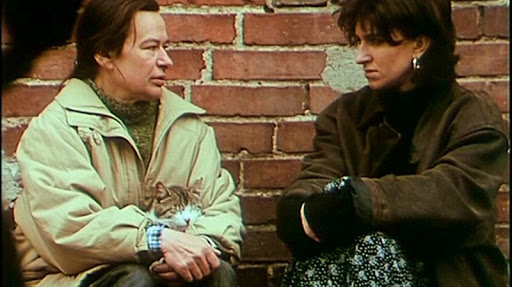
Speaking at a point in time when the consensus is that ‘no’ means ‘no,’ there are elements in these films where things come dangerously close to feeling uncomfortably intrusive. In The Visit there was a scene — shot from a distance — where the protagonist is talking to the journalist in a field, and she breaks up in tears. This is a particularly painful scene to watch. No matter that the second film shows more consideration even in there is no way to patch over the hurt that is already done by including the intimate painful moment in the original film.

In his lecture on Polish documentary in the 1970s, Polish scholar Mikolaj Jazdon,  (Available: https://www.youtube.com/watch?v=skFiK4DKzKI) remarked that Kieslowski had left the documentary form and switched to feature filmmaking because he found it impossible to show intimacy in documentary. In the case of Łoziński, the intimate moments are left in; he does not seek to move on to fiction.

Łoziński’s most widely seen film seems to be his latest, Father and Son on a Journey (Ojciec i syn w podróży, 2013), where he travels to Paris with his son, Pawel Łoziński, an important documentarian in his own right — and both produce their own versions of the journey, tackling sensitive family themes. The director’s oeuvre, however, is large and diverse. The films that have impressed me the most — those, dealing with ethical issues of everyday life and remembrance — include How to Live (Jak żyć, 1977), Witnesses (Swiadkowie, 1988), and Katyń Forest (Las Katyński, 1989).
THOUGHTS ON RACE, MEDIA AND MEMORY: FROM MANGROVE (2020) TO THE COLONY (1964)

Dina Iordanova

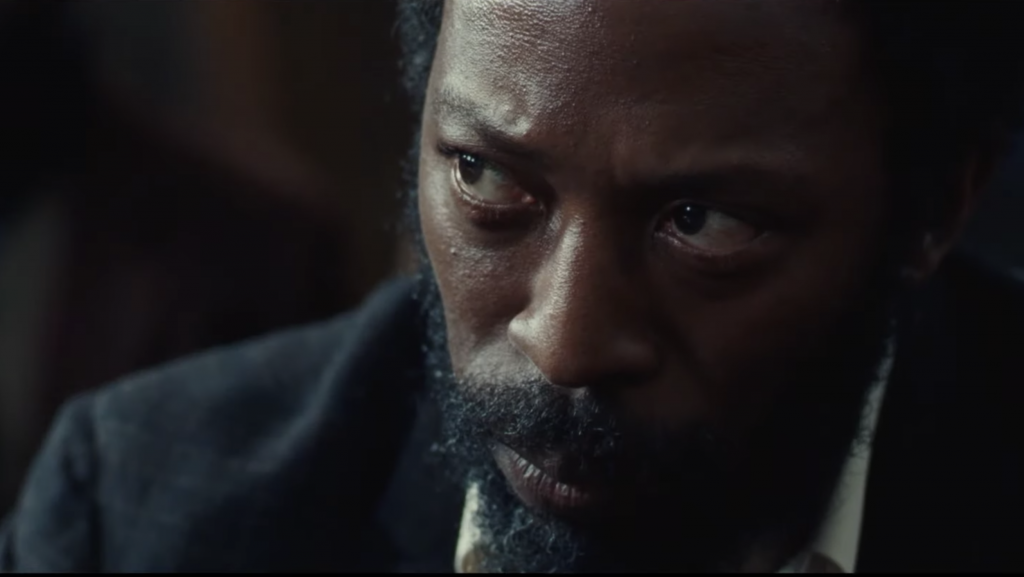
l watched Steve McQueen’s MANGROVE (2020), with a heavy heart. This film — about a painful trial that exposes the practice of Enoch Powell’s ‘rivers of blood’ stance and the extreme racial prejudice of the 1970s — moved me more deeply than his TWELVE YEARS A SLAVE (2013). It may now be 50 years since the events that are depicted, yet l feel this film is as topical today as it can be. Even if transformed and regulated, racism is built into the system, as events of this last summer — 2020 — have repeatedly revealed. Racism is alive and well. In Brexit Britain, it is being practiced, legitimately, through government-approved measures such as ‘hostile environment’, double standards in police brutality, and such likes. Leaving the EU will result in revisions to human rights practices and in cancelling  many of the current backstops available to vulnerable groups. The UK is on a downwards spiral back to what we see in the film.

THE STUDY OF HISTORY

I see comments — in various reviews of MANGROVE that have appeared in the media — that the trial of the ‘Mangrove nine’, as this episode of history is known, is being restored by McQueen to its proper place in accounting the history of racial injustice in Britain. Reviewers wonder if what happened would be taught more properly now…

Indeed, being a naturalised Briton, l had never heard of this trial during my 22+ years in this country. My son, who was schooled entirely in the U.K., was never taught anything related to race. In his education, the study of history was reduced to a few select ‘themes’ (e.g. Tudors, industrial revolution, Nazis), and l know that since he was in school the position of history on the curriculum has been reduced even further. 

Turning to British friends, I asked if their own experiences with history were similar. They confirmed it. 

“In the 1970s,” one said, “we were never taught about any of our own history that didn’t fit into an extremely narrow worldview. Even where dissent was covered at school it was very much from the angle that it was all in the past and we don’t need anything like that any more. The empire, of course, was only ever a good thing – civilising the natives and making them fit for the modern world. Everything useful I know about British history came from my own reading after I left school.”

Another friend said that she “never knew about the Mangrove nine case as a kid in the 70s.” But she clearly remembered hearing her uncle praising ‘the great Enoch Powell’. 

I was not hugely surprised by their responses. It is typical for the educational system of most nation states when it comes down to history to be selective and to whitewash inconvenient episodes. I remember the shock l felt on learning about atrocities committed by my country-fellowmen that we had never heard anything about (in this instance about atrocities committed by Bulgarian occupying troops in greece during WWII). I since made it a principle to ensure to include depictions of either side of a conflict (when teaching and writing, that is). It was particularly challenging when doing my book on Balkans/ Bosnian war, as it was full of selective narratives and deletions. However, I always thought Britain should know better than this….

I find it reassuring that a new generation of ethnic minority historians is appearing in this country, like Olivette Otele, David Olusoga, and Kehinde Andrews who are openly talking of the damage done by the British empire. Yet I also know a number of senior history and cultural studies people in British academia who seem quite uncomfortable with their scholarship.

For me, the most revealing episode that revealed the degree of lack in the study of British history took place in 2001. While lecturing about Indian film at the University of Leicester l found myself standing in front of some twenty white British students — and not a single one of them knew what was the Partition of India. Only two in the whole class were aware that India had been a British colony. As a Bulgarian who had arrived in the UK just three years earlier, I surely felt strange — a recent immigrant myself, it had fallen on my shoulders to fill in the huge gaps in their knowledge of the 20th century’s history of heir own country. 

An Indian friend based in the UK shared a similar yet much more recent experience. Teaching the work of Ritwik Ghatak for a  ‘World Cinemas’ module UK’s most prestigious Universities, she observed that the students did not know anything about the Partition. 

“I was writing the dates and names on the whiteboard with the surreal feeling of delivering a Wikipedia-like summary of one of the most significant historical events,” she said. “It was quite upsetting. I felt — especially as someone from India — like I was failing to convey the sheer weight of this, but also disappointed and shocked that I even had to explain the bare basics of a historical event of this magnitude”.

Steve McQueen's 'Small Axe on Amazon Prime: 'Mangrove' Review - Rolling  Stone

CIRCULATION

l always find it of interest to observe the relationship of a film’s mode of circulation to its impact. So I feel there are several aspects that could be better in the circulation of MANGROVE than its current release on the BBC iPlayer (after airing on 15 November 2020 on BBC One) and on the Amazon platform outside of the UK. 

First, the film is not distributed in cinemas — and this is not because many cinemas are closed. It has been planned as tv/platforms only released; no theatrical distribution. l can only speculate tas to why, and indeed this may seem a minor point in the times of COVID-19. However, Aron Sorkin’s film on the Chicago 7 — a direct comparator — was in cinemas as well as on Netflix, even if mainly criticised.

Second, MANGROVE had been on the main competition list at the Cannes festival, but then there was no proper festival. Thus any buzz (or award) that Cannes would generate, did not materialise. Well, MANGROVE later on ‘opened’ other festivals — New York, London…even if these also only took place online. However, l seriously doubt these have the clout of Cannes, even at the time when COVID-19 has paralysed the whole festival circuit.

And, third: The BBC, having co-produced it, has released it in Prime Time on a Sunday night (15 November 2020); the film is now available to view at their IPlayer. This sounds like a release as wide as it can get. But is it, really? Many people will see it, but then there are other substantial groups that will not. The way the BBC is set up currently makes it a paid platform — and one that is significantly costlier than others — that costs  £157.50  per annum for a compulsory license. Effectively, Britain’s national broadcaster is behind a significant pay wall and there are many groups that have no access to it. This includes, as of August 2020, all those over 75 years olds who previously were eligible for a free license (the change is estimated to have affected 5,000,000 people in the UK. I have no data on how many of them have decided to pay up for the license).  In addition, those who live in University accommodations— international students, visiting scholars — do not have access to viewing the BBC (nor any live television) unless they pay for the service; it is not included in their rent so most of them opt to subscribe to the much cheaper Netflix and do not view anything on the IPlayer whilst based in the U.K. Those in hospital care also have no access to the BBC — if they are to watch it, they are asked to pay for a special service. Yet another dimension of the iPlayer is geoblocked and can only access it from the territory of the UK — thus those who pay the BBC license fee but go abroad for a period, cannot access it even through a personal log in. This is somewhat strange in the age of advanced technology. By comparison, writing this from Italy, l have full access to everything on their national broadcaster’s app, RAIPlay, even if I have never paid a cent for accessing their service.  

So whilst the corporation is investing in producing a significant film as MANGROVE, I think there are many limitations in what they do to facilitate access to the work. 

REACTIONS

I watched MANGROVE online whilst abroad in Sicily, and there were few people around me that I could have meaningfully discussed the film. So I turned to searching the web and social media. Writing in the BFIs flagship magazine, Sight and Sound, Alex Ramon had described SMALL AXE (of which MANGROVE is the first episode) as ‘a BBC and Amazon Studios-produced five-part anthology series exploring Black British experiences from the late 1960s to the mid 1980s.’ Ramond had observed that one of its main achievements was to mark ‘a return to the kind of distilled, focused storytelling and socially relevant themes that distinguished BBC’s Play for Today.’ As to the first installment, ‘the film’s urgent, intelligent portrait of collective activism and resistance lingers’ and whilst connecting us to the past, Mangrove enlightens and empowers us in the present,’ Ramon, wrote (2020). I found his review quite balanced, but I thought it was withholding well deserved praise. 

So I wrote about how much the film had moved me on social media, and reactions came in quickly. British friends — some of them coming from families that had immigrated to Britain, came into the discussion. One of them — a Londoner of Pakistani origin who did graduate studies in America and who now teaches overseas — said he was feeling angry that no films like this were on television ‘when growing up in Inglan’[sic] in the 1970s. Other Britons spoke of it as ‘painful but essential viewing’. A Jewish friend from New York, a veteran in film studies, compared MANGROVE to Julie Dash’ classic DAUGHTERS OF THE DUST (1993), thus suggesting that the film is likely to be embraced for teaching by a wide international community. Other American friends described it as ‘stunning,’ ‘a tour de force,’ and said that ‘it needs to be widely distributed and viewed.’

But my excitement did not last long as, on the same day, I came across a piece where Steve McQueen was renouncing the ‘blatant racism’ of the film industry in Britain (McQueen, 2020). He had worked predominantly in America for the past decade, and, having returned to the UK to make the five SMALL AXE films, he had come to realise that British television and film-making teams were still predominantly white. Nothing much had changed and there were almost no black people on film crews — even where the film being shot was meant to challenge matters of  racial (dis)balance in society. So McQueen was compelled to insist on quotas: in a society where 14% of the population belongs to the BAME community, it was essential to ensure an infrastructure that would guarantee a proportionate access to jobs, training and apprenticeships, he claimed. ‘Every British production should have a quota in place for actors and crew’ […] ‘British production companies, financiers and the US studios working here need to make a decision about what side of history they want to be on.’ 

I wonder how many of these recommendations are being actually implemented?

The UK film industry has to change. It's wrong, it's blatant racism | Race  | The Guardian

THE COLONY (1964): AN UNSUNG CLASSIC

Inevitably, the famous ‘rivers of blood’ 1968 speech by Enoch Powell comes to mind here — a massively important confrontational racist event that is not even referenced in productions like THE CROWN (2016-2020) that purportedly survey all the key moments in British history since the 1950s.  As film scholar Jasper Sharp observed, the BBC Radio 4 have done a number of programmes discussing the legacy of Powell’s speech, on its anniversaries in 2008 and 2018 (25 April; 50 Years On). “I’m not sure of the purpose of this,” Sharp wrote, “because I think revisiting these ideas in 2008 only raked up an ideology that at least at the time seemed very much a thing of the past and might well have been forgotten otherwise.”

Among the films on the BBC IPlayer one can find Philip Donnellan’s amazing THE COLONY, a documentary made by the BBC in 1964. It features interviews with many recent Windrush immigrants who speak of the alienation and abuse they suffer. Only, no one promotes this film.

If one sees THE COLONY, one realises there is nothing new under the sun. The mistreatment that is reconstructed by Steve McQueen in 2020 was already known about and chronicled masterfully in this powerful work of this anti-racist chronicle. THE COLONY, however, is a film that is spoken about as ‘very rare’ and ‘almost forgotten’ and it has only occasionally been shown in Birmingham, where it was shot — it played the Flatpack festival once, at The Drum, as well as on local television (BBC1 West Midlands in 2011, see the YouTube clip below). But whereas the Enoch Powell’s commemorations are broadcast through the main channels and we are all reminded all the time of his horrific vision, I wonder how many people have actually seen THE COLONY?

Birmingham’s The Drum shows a 1964 film called – ‘The Colony’, 4 min 40 sec

REFERENCES:

25 April 1968. BBC Radio 4, 25 April 2008. https://www.bbc.co.uk/radio4/1968/riversofblood.shtml

50 Years On: Rivers of Blood. BBC Radio 4. 14 April 2018. https://www.bbc.co.uk/programmes/b09z08w3?fbclid=IwAR0I0x2sJBy7cifCyeXpZVKRaubrG05B272Fjd0wpv_IflrxpTq5ArjGMHg

McQueen, Steve, ‘The UK film industry has to change. It’s wrong, it’s blatant racism.’ The Observer, 20 June 2020. Available: https://www.theguardian.com/world/commentisfree/2020/jun/20/to-see-race-and-class-at-work-in-britain-just-try-a-film-set-steve-mcqueen?

Ramon, Alex. ‘Mangrove relays Black British struggles of the past’, Sight and Sound, 19 November 2020.  Available: https://www.bfi.org.uk/sight-and-sound/reviews/mangrove-steve-mcqueen-small-axe-black-british-collective-struggle?